
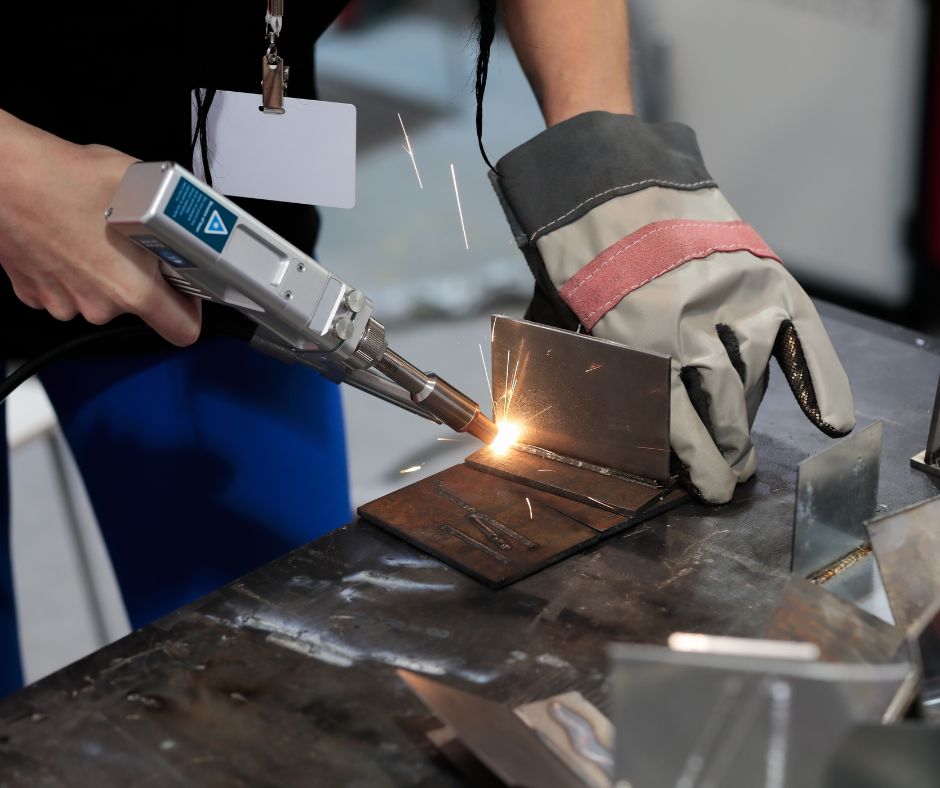
Welding at home is becoming increasingly popular among DIY enthusiasts, hobbyists, and even those considering a career in the trade.
It’s a practical way to repair metal items, build custom projects, or test the waters of a new profession—all from the comfort of your own garage or workshop.
Stratford Career Institute offers an introductory online welding course to help you learn the fundamentals before investing in expensive equipment or professional training. This self-paced, non-accredited program can introduce you to welding and help you decide if you’d like to pursue more advanced instruction later.
This guide explains home welding, how to get started safely, the basic tools you’ll need, and where to find learning resources.
What Is Home Welding?
Welding at home simply means performing small-scale welding projects outside of an industrial setting, typically in a garage, shed, or dedicated workshop. People choose home welding for a variety of reasons, such as:
- Repairing tools,
- Fabricating artwork or furniture,
- Maintaining vehicles, or
- Gaining basic experience before pursuing a professional path.
Compared to industrial welding, home welding usually involves lighter equipment, smaller-scale projects, and a focus on safety in a less-controlled environment. It’s ideal for those who want to learn the basics without the pressure of a job site.
How to Start Welding at Home
Getting started with welding at home is about creating the right conditions for safe and effective practice, including:
- Creating a safe workspace,
- Acquiring the right equipment, and
- Learning the basic welding techniques.
Each plays a critical role in helping you weld safely and effectively at home. We’ll break them down in more detail below.
Step 1: Creating a Safe Workplace
Safety should be your top priority in any welding environment. At home, this means:
- Wearing complete protective equipment every time you weld,
- Keeping flammable items far from your workspace,
- Ensuring proper ventilation to avoid inhaling harmful fumes, and
- Checking your electrical connections and grounding before you begin.
Taking these precautions reduces the chance of injury and can help you build good habits.
Step 2: Acquiring the Right Equipment
When you’re learning how to weld at home, having the right gear can make all the difference. MIG welding (Gas Metal Arc Welding) is a popular choice for beginners because it is versatile and produces cleaner welds with less practice.
Begin with simple joints on scrap metal to develop your technique, speed, and confidence before moving on to larger or more complex projects.
Here are some essential tools and accessories:
- Welding machine. For beginners, a small MIG or flux-cored welder is often easiest to handle.
- Protective gear. A welding helmet, safety glasses, flame-resistant gloves, a welding jacket, and steel-toed boots protect you from sparks and heat.
- Clamps and magnets. These hold your workpieces steady and at the correct angles.
- Welding table or fireproof surface. These provide a stable, safe area to work.
- Basic hand tools. Wire brushes, chipping hammers, pliers, and grinders help you prep and clean metal surfaces.
Investing in quality gear initially can make welding safer and your results more consistent.
Step 3: Learning the Basic Welding Techniques
If you’re wondering how to start welding at home, online and self-guided resources can be great. Stratford Career Institute’s introductory welding course provides an affordable, flexible way to explore welding fundamentals without leaving your house.
It won’t give you certification or replace hands-on practice, but it can help you understand processes, safety, and tools before you invest further in training or equipment.
When to Consider Professional Training
While you can learn the basics of welding at home, more advanced skills, such as working on structural projects or qualifying for high-paying welding jobs, often require formal instruction, apprenticeships, or certification programs.
Consider enrolling in a formal welding program, seeking an apprenticeship, or obtaining industry-recognized certifications to develop advanced skills and open doors to more specialized, higher-paying opportunities.
Take the First Step Toward Welding with Stratford Career Institute
Learning how to weld at home can be a rewarding way to build practical skills, explore a potential career, or create projects you’re proud of. You can gain confidence without stepping into a professional shop immediately by setting up a safe workspace, investing in basic equipment, and starting with beginner-friendly techniques.
Stratford Career Institute’s introductory online welding course gives you a convenient and affordable way to explore welding basics at your own pace before committing to more advanced training or certification. If you’re ready to see if welding is right for you, visit Stratford Career Institute online to learn more or enroll today.
RATE THIS POST


 Loading...