
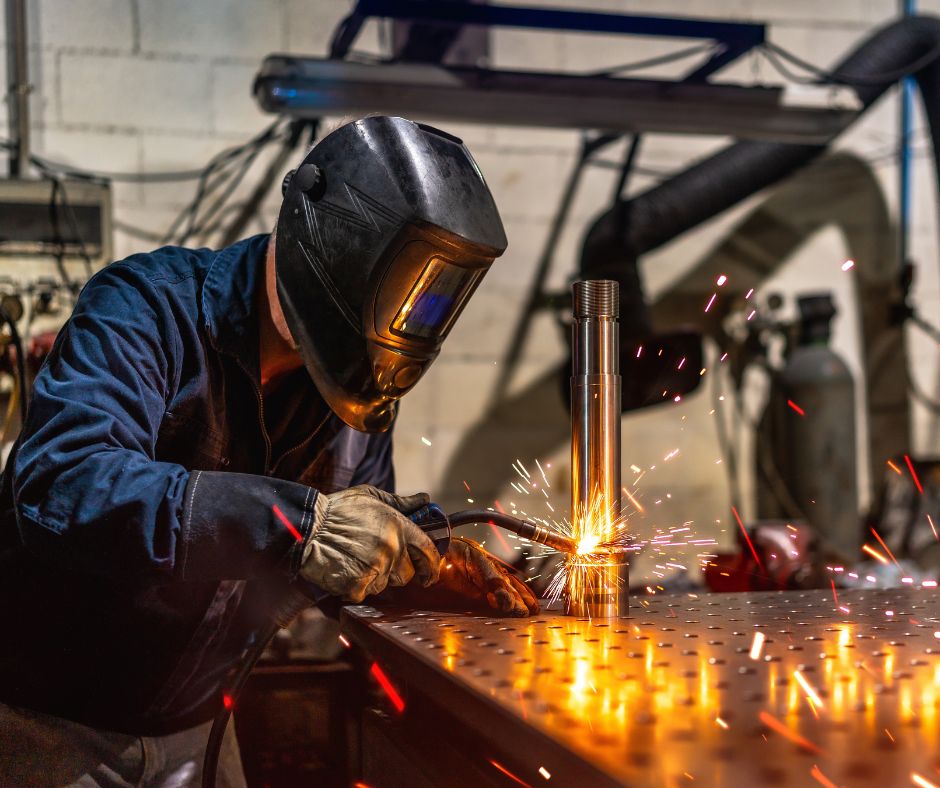
Welding is often considered one of the most hands-on, creative, and essential trades. It is used to build everything from towering skyscrapers to custom metal art. Whether you’re curious about welding as a new hobby or exploring it as the first step in a skilled trade career, this beginner’s welding guide will walk you through the basics. If you’re ready to start job hunting, see our guide on How to Get into Welding with No Experience. If working outdoors with your hands appeals to you but welding isn’t quite the right fit, you might also consider how to become a gardener.
At Stratford Career Institute, we offer a convenient and flexible introductory welding course that may help you better understand the fundamentals of this craft and decide if it’s a path you’d like to explore further.
Read this guide to learn the essentials of welding for beginners.
What Is Welding?
Welding is the process of fusing two or more pieces of metal using heat, pressure, or both. It’s an essential skill in the construction, automotive, aerospace, shipbuilding, and manufacturing industries.
What Are Common Types of Welding for Beginners?
When learning welding for beginners, it helps to understand the main types of welding you’re likely to encounter. Each method uses different tools and techniques, and some are easier to learn than others. While beginners often start with one method, many welders eventually learn multiple types as their skills develop.
MIG Welding (Gas Metal Arc Welding)
MIG welding is often considered one of the most beginner-friendly welding methods. It utilizes a welding gun that automatically feeds a wire electrode through the tip, facilitating a steady weld with reduced manual control required.
Because the wire feeds continuously, beginners can focus more on movement and positioning instead of managing multiple components.
MIG welding is commonly used on thinner metals and is popular for home projects, automotive repairs, and basic fabrication.
Stick Welding (Shielded Metal Arc Welding)
Stick welding can feel approachable to beginners because it uses relatively simple equipment and does not require external shielding gas. This makes it useful in outdoor or less controlled environments where other welding methods may be harder to use.
The process is direct: as the electrode melts, it creates the weld and provides protection simultaneously. While stick welding can require more hand control than MIG welding, beginners often find it helpful for learning how heat, movement, and metal interact. With practice, it can be a practical method for working with thicker materials and repair projects.
Flux-Cored Arc Welding
Flux-cored arc welding is similar to MIG welding but uses a special wire filled with flux instead of solid wire. This flux helps shield the weld from contaminants, making it easier to use outdoors.
Beginners may encounter this method when working with thicker materials or in environments where shielding gas is less practical. While it can produce strong welds, flux-cored welding often creates more smoke and spatter, which can require extra cleanup. It is sometimes used as a stepping stone between MIG and stick welding.
What Equipment Do You Need?
Starting your welding journey means gathering the right tools. Having the proper gear can make learning easier, improve the quality of your welds, and keep you safe along the way. Here’s what you’ll typically need as a beginner:
- Welding machine. For most beginners, a MIG welder is a great choice. It’s user-friendly and works well for basic projects. As you gain experience, you might explore stick or TIG welding machines for different materials and techniques.
- Welding helmet. Choose an auto-darkening helmet that adjusts to the brightness of the arc. It protects your eyes from UV radiation and lets you see clearly during work.
- Protective clothing. A flame-resistant welding jacket or apron protects your arms and body from sparks and heat.
- Welding gloves. Thick, heat-resistant gloves are essential to shield your hands from heat, UV rays, and flying sparks. Look for gloves that offer both protection and flexibility.
- Chipping hammer and wire brush. These tools help you clean your welds by removing slag and smoothing out the surface.
- Angle grinder. A grinder is handy for prepping metal surfaces before welding and finishing them afterward. They are also great for cutting or smoothing metal.
- Measuring tools. A tape measure, square, and marking tool will help you accurately measure, align, and mark your materials before making any cuts or welds.
- Ventilation equipment. Welding produces harmful fumes. If you’re working indoors, use a fan or fume extractor to keep the air safe.
This list covers the basics, but your toolkit may also grow as you grow your skills. Starting with the right equipment lays the foundation for safe welding practice.
What Skills Are Important for Welding Beginners?
Welding involves more than learning how to operate equipment. Beginners often find that developing certain skills alongside technical knowledge makes the learning process smoother and more effective. Some of those skills include:
- Hand-eye coordination. Welding requires steady movements and careful control of the torch or welding gun. Coordinating what you see with how you move your hands helps create smoother, more consistent welds and reduces errors.
- Attention to detail. Small factors such as travel speed, angle, and heat settings can significantly affect weld quality. Learning to notice and adjust these details can help beginners improve faster and understand why certain welds succeed or fail.
- Basic math and measurement skills. Welders regularly measure materials, read dimensions, and mark cut lines. Simple math skills, such as fractions and basic geometry, can help beginners prepare materials accurately and avoid wasted time or materials. Many welders also work from technical drawings, so it can help to understand what drafting in AutoCAD involves.
- Problem-solving ability. Welding does not always go as planned, especially when learning. Being able to identify issues and adjust technique accordingly is an essential part of skill development. This troubleshooting mindset carries over well to other technical trades. For example, see our guide on 5 Computer Technician Skills You Need for the Job.
- Patience and focus. Welding takes practice, and progress may feel slow at times. Staying patient and focused allows beginners to learn from mistakes, build confidence, and develop better habits over time.
Developing these skills early can help beginners approach welding with confidence and decide whether they want to continue learning the trade in more advanced settings.
What Industries Do Welders Work In?
Welding skills are utilized across numerous industries. The type of work a welder does often depends on the industry, materials, and environment involved.
Common industries for welders include:
- Construction. Welders in construction may work on structural steel for buildings, bridges, and large infrastructure projects. This work often involves heavy materials and takes place outdoors or on active job sites. Welders on these projects often work alongside general contractors, and if you’re curious about that career path, see our guide on How Much Does a General Contractor Make. Some welders also advance into project oversight roles over time. For more, see our guide on How to Become a Construction Manager Without a Degree.
- Manufacturing. Many manufacturing facilities rely on welders to assemble machinery, equipment, and metal components used in everyday products. This type of work is often performed in factories or production shops.
- Automotive and transportation. Welders in this industry may help repair vehicles, fabricate custom parts, or assist in the vehicle production. If car repair interests you beyond welding, see our guide on Best Ways to Learn How to Fix Cars Online. For two-wheeled vehicles specifically, see our guide on How to Become a Motorcycle Mechanic: Explore a New Career.
- Shipbuilding and maritime work. Welding plays an important role in building and repairing ships, boats, and offshore structures. These roles often involve working with thick metals and specialized welding techniques. Some of this work even takes place below the surface. For more, see our guide on Underwater Welding: How It Works and Who Needs It.
- Aerospace and aviation. In aerospace settings, welders may work on aircraft components that require high levels of accuracy and attention to detail.
- Agriculture and heavy equipment. Welders are frequently needed to repair and maintain farming equipment, trailers, and industrial machinery. If hands-on vehicle repair interests you, see our guide on ATV Repair Course: Learn to Fix Four-Wheelers for another mechanically-focused trade to explore.
Because welding skills can apply to many industries, some welders choose to specialize, while others work across different fields as opportunities arise.
Prioritizing Safety: Welding Tips for Beginners
Welding is a powerful and rewarding skill, but it comes with real risks. That’s why safety should always come first when you’re starting. Here are common safety tips regarding welding for beginners.
- Wear protective gear. Always wear a welding helmet, flame-resistant clothing, gloves, and safety boots. Avoid synthetic fabrics that can melt and cause burns.
- Work in a safe environment. Make sure your workspace is clean, dry, and well-ventilated. Welding can produce toxic fumes, so good airflow is essential.
- Check for fire hazards. Sparks can fly far. Remove flammable items from your workspace and keep a fire extinguisher nearby.
- Mind your surroundings. Welding arcs can damage the eyes of people nearby. Use welding curtains or shields to protect others if you’re not working alone.
- Never weld without training. Take time to understand your equipment and welding methods before starting.
Keeping safety in mind protects you from injury and sets you up for better welding habits.
How to Learn Welding
You don’t need a college degree to become a welder, but you do need training. Welding is a hands-on profession. Employers typically look for candidates with proven skills, certifications, or both. How you gain those skills can vary depending on your goals. The same is true for other skilled trades. For example, see our guide on How to Get Hired as an HVAC Technician with No Experience for a look at a similar hands-on path.
Some people start with a formal trade school or technical college program offering in-depth training, equipment access, and certification exam preparation. Others might begin with an apprenticeship. Some start with an introductory course to get a feel for the trade before committing to more advanced programs. Many other skilled trades follow a similar path. For example, see our guide on How to Become a Locksmith for another hands-on career built around apprenticeship-style training.
If you do decide to pursue welding professionally, you’ll likely need hands-on experience through a training program or apprenticeship and a solid understanding of safety procedures and welding codes.
From there, you can explore roles in construction, manufacturing, repair work, and more. Welding may be physically demanding, but it’s also a skill-based trade with steady demand and room for growth, especially for those who continue learning and specialize in advanced techniques.
Frequently Asked Questions
Does welding require good eyesight or physical strength to get started as a beginner?
Reasonably good vision is helpful since precision matters, though corrective lenses or a welding helmet with the right lens shade can address most vision needs. Physical demands vary by setting, with industrial welding often requiring more stamina and strength than hobby or home welding.
Can someone with no mechanical background succeed at welding?
While some mechanical aptitude helps, welding is a skill that’s primarily learned through practice and instruction rather than requiring prior mechanical experience, which is why beginner-friendly courses exist to build that foundation from the ground up.
Start Exploring Welding Basics with Stratford
Stratford Career Institute offers a convenient and affordable introductory welding course for beginners. You can study from home, at your own pace, and start learning the fundamentals, such as welding types, tools, safety, and terminology.
Remember, our course is meant to help you explore your interest in welding. It does not offer certification or qualify you for employment, but it can be a first step toward further training or hobby welding.
Want to learn more about welding tips for beginners? Take a look at Stratford Career Institute’s Welding course and see if it’s the right way to begin your journey.
RATE THIS POST

 Loading...