
Skilled trade jobs continue to attract attention as more people look for practical, hands-on careers that support everyday life. Skilled trades play a critical role in keeping communities running. As industries evolve and experienced workers retire, many employers are actively seeking individuals who are willing to learn a trade and develop practical skills over time.
For those exploring in demand trades but unsure where to start, Stratford Career Institute offers a flexible way to begin learning about various vocational career paths. Founded in 1991, Stratford Career Institute is a privately owned correspondence school that provides self-paced, introductory at-home courses designed for busy adults across North America.
Stratford’s courses allow students to explore trade skill jobs at their own pace, helping them decide whether a particular trade aligns with their interests before pursuing further training or hands-on experience.
In this blog post, we’ll walk through five trade jobs currently in demand across the United States, exploring what skills and compensation they typically involve.
1. Contractor / Construction Management
Contractors and construction managers oversee construction projects by coordinating schedules, budgets, materials, and workers. Their role focuses on planning and supervision rather than performing all hands-on construction tasks. These positions are commonly found in residential buildings, commercial developments, and infrastructure projects.
According to the Bureau of Labor Statistics, average compensation and growth potential for construction managers break down as follows.
| Median Pay | $106,980 annually |
| Average Pay Range | $65,160 to $176,990 annually |
| Projected Growth (2024–2034) | 9% |
| Estimated Annual Openings | About 46,800 |
Construction management roles often require substantial industry experience, licensing, or formal education, depending on the position and state.
2. Electrician
Electricians install, maintain, and repair electrical systems in homes, businesses, and industrial facilities. Their work includes wiring buildings, troubleshooting electrical problems, and ensuring systems meet safety standards. Electricians are essential across construction, maintenance, and infrastructure projects nationwide.
| Median Pay | $62,350 annually |
| Average Pay Range | $39,430 to $106,030 annually |
| Projected Growth (2024–2034) | 9% |
| Estimated Annual Openings | About 81,000 |
Becoming an electrician typically requires a combination of education and hands-on training, often through apprenticeships. Electricians generally need to be licensed and sometimes certified depending on location and type of work.
3. Gardening & Landscaping
Gardening and landscaping workers maintain outdoor spaces by caring for lawns, plants, trees, and grounds. Many fall under the category of grounds maintenance workers, which includes landscapers, lawn care workers, and property groundskeepers. These roles support residential properties, commercial sites, and public spaces.
| Median Pay | $18.50 per hour |
| Average Pay Range | $14.49 to $27.14 per hour |
| Projected Growth (2024–2034) | 4% |
| Estimated annual openings | About 171,600 |
Education requirements are typically minimal, with many workers learning on the job.
4. HVAC
HVAC technicians install, maintain, and repair heating, ventilation, air conditioning, and refrigeration systems. Their work helps ensure indoor comfort, air quality, and system efficiency in homes, commercial buildings, and industrial facilities. HVAC roles are essential for both new construction and ongoing maintenance.
| Median Pay | $59,810 annually |
| Average Pay Range | $39,130 to $91,020 annually |
| Projected Growth (2024–2034) | 8% |
| Estimated Annual Openings | About 40,100 |
Becoming an HVAC technician typically involves education at a technical or trade school or hands-on experience. Many have a combination of both. Licensing may be required.
5. Welding
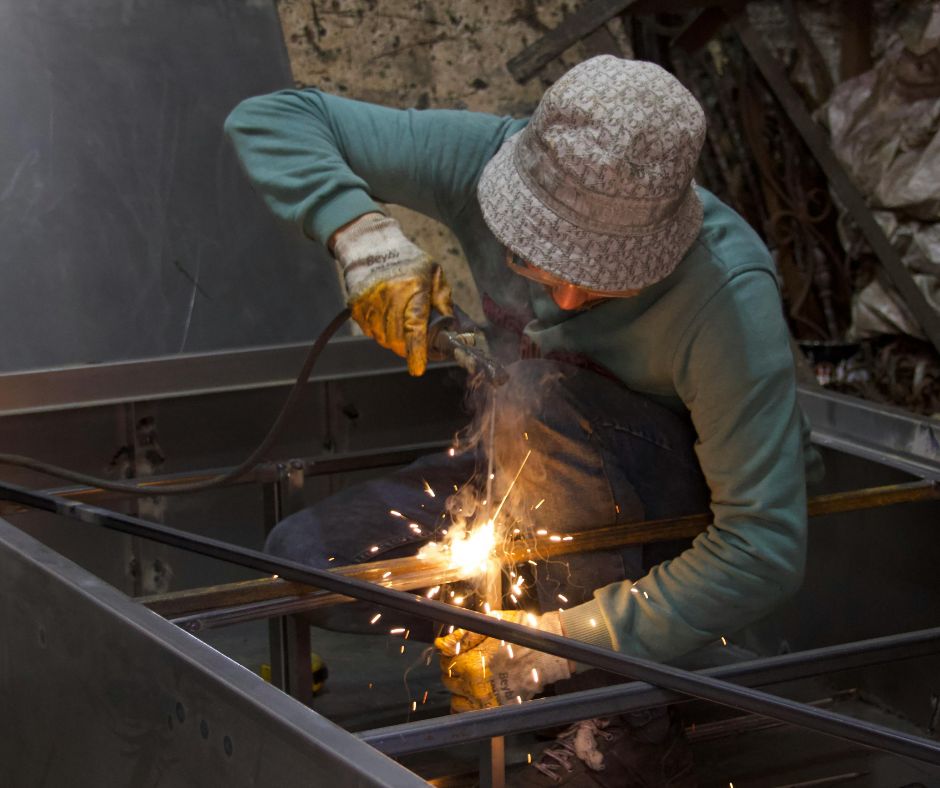
Welders join and repair metal parts using heat, tools, and specialized equipment. Their work is essential in industries such as construction, manufacturing, automotive repair, and shipbuilding. Welding roles vary widely depending on the materials used and the setting, from small workshops to large industrial sites.
| Median Pay | $51,000 annually |
| Average Pay Range | $38,130 to $75,850 |
| Projected Growth (2024–2034) | 2% |
| Estimated Annual Openings | About 45,600 |
Although overall growth is slower than average, openings are expected as experienced welders retire or leave the field. Automation may reduce demand in some settings, but skilled welders are still needed where precision and hands-on expertise remain essential.
Welders typically require a high school diploma or equivalent, along with technical training and on-the-job experience. Many gain skills through vocational programs, apprenticeships, or employer-based training.
Exploring Trade Skill Jobs with Stratford Career Institute
If you are researching what trades are in demand, understanding job duties, pay trends, and outlook is an important first step. Skilled trades continue to support essential industries nationwide, offering a diverse range of opportunities that cater to various interests, physical demands, and long-term goals. Exploring different skilled trade jobs in demand can help you determine which path may be worth pursuing further.
Stratford Career Institute offers a flexible approach to starting your exploration. We focus on convenience, affordability, and independence. If you are considering a skilled trade career, contacting Stratford Career Institute can be a practical option for learning more and exploring introductory coursework.
Resources
- BLS Construction Manager
- BLS Electricians
- BLS Grounds Maintenance Workers
- BLS Heating, Air Conditioning, and Refrigeration Mechanics and Installers
- BLS Welders, Cutters, Solderers, and Brazers
RATE THIS POST

 Loading...